Emerging into the AI field can seem like a daunting task; ‘experience required’ job ads seem to haunt every corner of the internet. Yet, the tables have turned. The rapid expansion of AI has created previously unseen entry points for individuals with diverse backgrounds and a penchant for initiative.
Companies are beginning to realize that a candidate’s potential and their ability to complete project work can outweigh years of formal experience. This is not just hearsay; it’s the new reality of breaking into an AI career.
So while the landscape might appear intimidating at first, this guide will provide you a practical roadmap to navigate it successfully, drawing on your existing skills and showcasing your potential.
The Entry Barrier: It’s A Myth
Pop culture and misunderstandings have made two notions popular about getting into AI: one, you need a Ph.D. in Computer Science, and two, you need years of industry experience. Let’s burst these bubbles.
While it’s often assumed that a doctoral degree in CS is an absolute requirement for an AI career, this isn’t the reality. In truth, an array of AI roles appreciate diverse skills and practical knowledge. Understanding real-world problems, creative problem-solving, communication, and learning agility can often hold as much, if not more, weight than a stack of degrees.
Similarly, despite the general belief that you need years of industry experience under your belt to start your AI journey, demonstrable projects and a swift learning curve often matter more. Companies are keen to hire individuals who can showcase their learning experience through projects, thereby revealing an ability to apply their skills. Practical knowledge, therefore, can trump formal time spent in the industry.
Building Your AI Foundations: It’s All About The Knowledge, Not Degrees
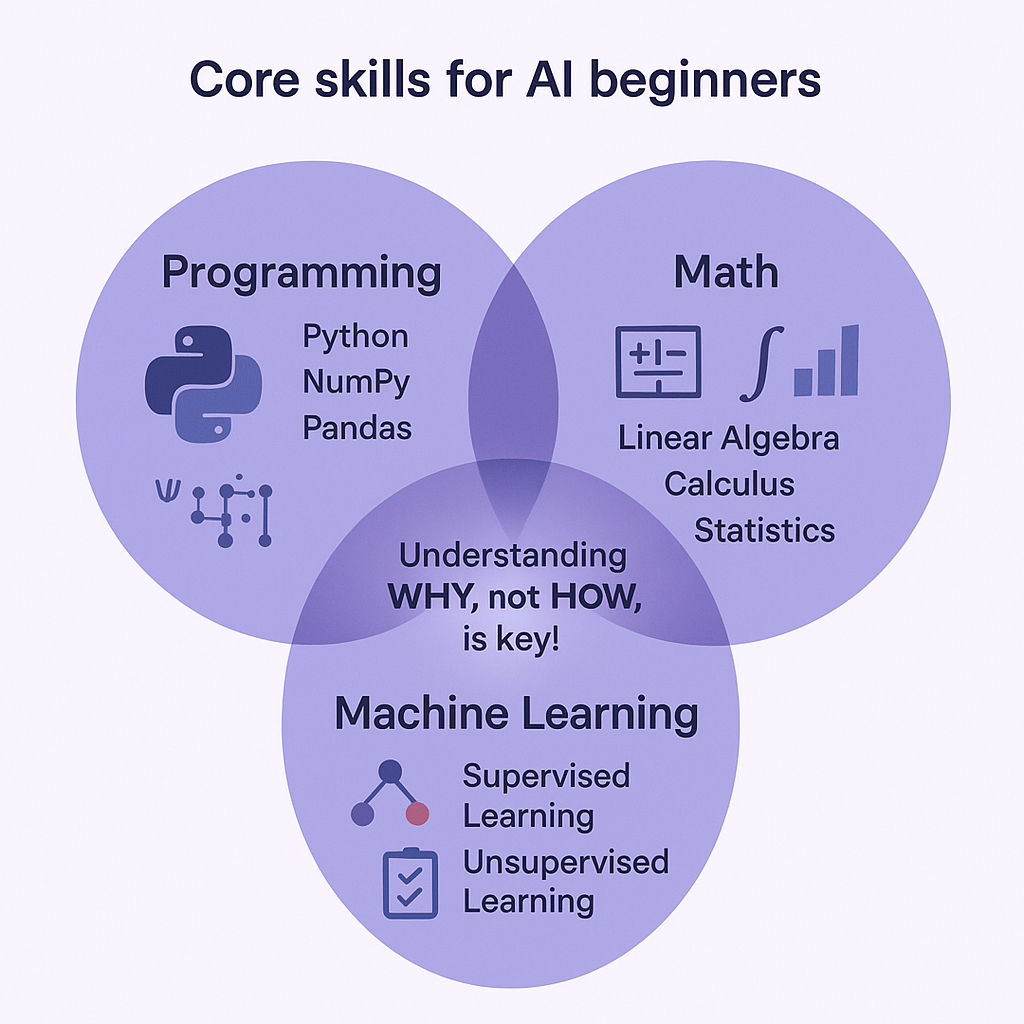
Forget about the formal degrees for a moment, and focus on knowledge understanding. When venturing into AI, you need to get your hands dirty with the core concepts first. Believe it or not, these concepts aren’t as complex as rocket science.
Firstly, you would need to conquer the basics of programming. Python is a great starting point. It is a high-level, intuitive language that is widely used in the AI community. You’d also want to know how to use libraries like NumPy and Pandas as they streamline heavy-lifting tasks in data manipulation and analysis.
Secondly, don’t avoid the underlying math. Familiarize yourself with linear algebra, calculus, and statistics. These mathematical principles are entwined in AI algorithms, playing vital roles in making predictions and decisions.
Finally, immerse into the heart of AI – the machine learning concepts. By fully understanding supervised and unsupervised learning, and the nuances of model evaluation, you’ll gain the necessary knowledge for creating machine learning models.
Remember, learning AI is not about rote memory or mindlessly following a manual, it’s about comprehension, understanding why certain methods work. Understanding the ‘why’ empowers you to troubleshoot issues, optimize models, and brings you one step closer to becoming an effective AI professional.
Elevate Your AI Self-Study: Top-notch Resources to Explore
Take advantage of the freedom and flexibility of self-study to get your feet steady in the AI field; we recommend a few resources that ought to be on your shortlist.
1. Coursera’s Machine Learning course by Andrew Ng delivers comprehensive yet digestible knowledge on core AI concepts. Often dubbed as the “Bible of AI,” this is a must for beginners.
2. “Deep Learning” by Goodfellow, Bengio, and Courville provides thorough insight into comprehensive AI concepts and techniques. This book plays a crucial role in deepening your understanding of AI.
3. Kaggle, more than a competitive platform, serves as an open gym for AI practice. You get real-life data sets to work on, advance your skills, and learn from fellow AI enthusiasts.
4. The HarvardX’s Data Science course available on edX builds your capability to interpret and work with real-world data – a critical skill in AI.
5. For mastering complex concepts and especially when encountering difficult Edubrain homework problems with answers, platforms like Edubrain can be invaluable. They enhance your understanding of the underlying math and chemistry required for advanced AI applications.
These resources cater to different style learners, striking a balance between theoretical foundations and practical skills. As each has its strengths, don’t stick to one; blend these resources for a comprehensive self-study experience.
Project-Based Portfolio: The Key to AI Experience
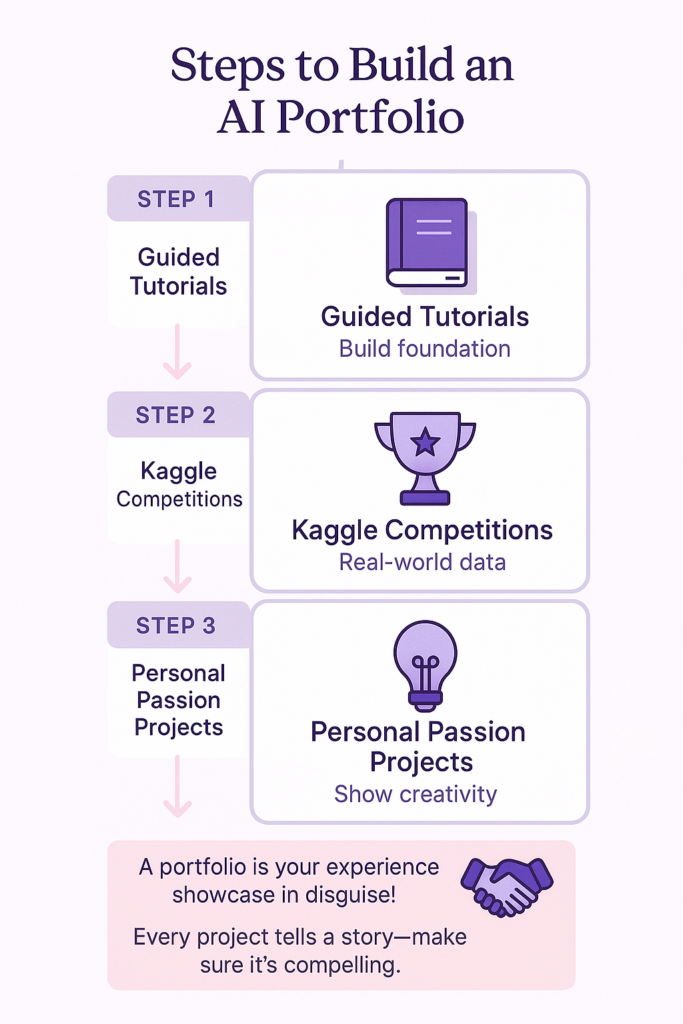
Stop imagining yourself as a job applicant for a moment and start thinking like a recruiter. What impresses them? Experience. Now, how do you gain this much-needed experience in AI? It’s simple. Let’s carve your path with a robust project-based portfolio.
Guided tutorials sit at step one. You replicate, you understand. It sounds simplistic, yet it’s critical. Tutorials equip you with the must-have skills and techniques in AI. You’ll run through the basics, apply them, and more importantly, start thinking the AI way.
Next, you’ll plunge into the competitive world of Kaggle. Real-world data waits for you here. Enter this playground, investigate real problems, and apply your skills. Kaggle isn’t just about winning; it’s about refining your capacity to handle live data.
Then, direct your enthusiasm towards personal passion projects. Here’s your chance to solve distinctive problems that catch your fancy. Maybe you want to use AI to sort your music playlist or predict the best time to water your plants. These ventures highlight your creativity and problem-solving prowess, which are admirable traits in an AI professional.
Lastly, dip your toe in the sea of open-source contributions.
The purpose here is twofold. First, you learn through collaboration and feedback from fellow contributors. Second, you showcase your ability to work in a team, an attribute treasured in any professional setting.
This structured collection of projects provides hands-on experience, showing potential employers your practical ability and enthusiasm for AI. It’s not about showcasing perfect projects but rather demonstrating your learning commitment and ability to apply AI concepts. Dig in, make mistakes, learn. That’s the route to crafting a compelling AI portfolio.
AI Project Checklist for High Impact
While creating your project portfolio, you’ll want your work to stand out to recruiters. Here are the key elements that make a project memorable:
1. Kick off with a precise problem statement. Explain the “why” in simple, compelling terms.
2. Opt for easy-to-follow code. Include software design principles and inline comments for clarity.
3. Include some captivating visualizations to demonstrate your results effectively.
4. Your methodologies and decisions need elaboration. Don’t assume the viewer knows your thought process.
5. Think about a live demo or deployment. Practical demonstrations often leave a stronger impression.
6. Maintain version control. Platforms like GitHub can be useful, making your workflow transparent and organized.
A project fulfilling these criteria not only displays your technical prowess, but illustrates your holistic approach to problem-solving. This dynamic is what will help you rise above the AI talent pool.
The Power of People: Unlocking the AI Job Market
Let’s demystify one of the vital elements of snagging an AI job. Fact is, opportunities are often discovered, not through job boards, but human networks. Insights, advice, exposure to realities of the job – this is the distinct advantage of networking. And yes, that includes online networking, very relevant in our digital age.
So, where to start? Linkedin, but not passive scrolling. We’re talking active engagement. Share your thoughts on AI developments, engage in dialogues, and nurse connections that feel authentic. Online AI communities such as forums, Slack teams, or Reddit threads will also give you interaction and insider perspective.
A word to the wise though – don’t make it all about hunting for a job. Bring the mindset of genuinely wanting to learn. Bring contribution and appreciation the table. Strive for reciprocal relationships, not one-way transactions.
But don’t limit yourself to online interactions. Virtual meetups and webinars, often frequented by industry-insiders, offer a peek into the current trends and future projections of AI. Yes, they’re worthy of your time and yes, going up to ‘virtually’ chat with speakers post-session is recommended!
Networking with recruiters is no less important. Yet, always keep in mind that you are not just another candidate clamoring for attention. Showcase your narrative, the values you bring, the unique way you approach AI.
Don’t underestimate the power of informational interviews either – these are golden because they give you insights directly from people actually in the roles you’re aspiring for. Not only do they help you understand the landscape better, but they also create personal relationships that could lead to job referrals.
In essence, thoughtful networking will guide you to the ‘hidden job market,’ the one that isn’t strictly reflected in the classifieds but navigated through connections made, conversations had, and relationships nurtured. There’s a whole landscape of opportunities out there, waiting to be discovered. Will you walk that path?
Past Expertise as a Strength in AI
Entering the AI field with a non-traditional background can actually help set you apart. Let’s say your previous experience lies in finance, marketing, or healthcare. You’re not starting from scratch, but rather, with a unique domain expertise that many AI teams simply don’t have access to.
These industries are ripe for the benefits of AI, and your existing understanding of their intricacies is an asset. An AI team can teach codes to a marketing whiz easier than teaching the complexities of marketing nuances to an AI expert.
So, instead of attempting to bury your past career, boldly present it as a differentiating factor. Highlight your transferable skills. Being a sound problem-solver, having a knack for data analysis, even outside AI data, the ability to communicate effectively, and commendable critical-thinking capacity, are all strengths to leverage.
Let’s face it, AI is reshaping diverse sectors, and your dual skillset gives you a clearer understanding of how to bridge gaps. So, that non-AI background you’re worried about? It might just be your unique advantage.
Applying for AI Jobs: Tactics and Traps
An AI job application isn’t a mere submission; it’s an assertion of who you are and the value you can offer. Do stratify the process: customize your resume for each AI role you apply to, and ensure it sings about your most relevant skills and projects rather than just listing past duties. Launch yourself beyond the paper too. Incorporate a clear link to your portfolio where your completed AI projects live, pull strength from compelling cover letters and let resilience show in your follow-up.
The flipside presents practices to avoid. Don’t get trapped into using generic resume templates, they rarely capture your uniqueness. Eschewing a lie about skills you don’t possess is prudent; honesty always trumps short-lived make-believability.
Don’t hone in only on senior roles; the winding path of entry-level or mid-tier positions often holds the most learning. And lastly, never underestimate the respect that a timely follow-up can garner. It shows persistence, a valued trait in any field, AI not being an exception.
A measure of common sense, clarity in presentation, and sincerity in approach can take you a long way in the AI job application journey. Don’t just apply, make an impression.
Path Forwards: Embracing Change in AI Careers
Consider landing your first AI job as the initial milestone, not the summit in your career. AI, by nature, evolves ceaselessly which necessitates adaptability and an appetite for life-long learning.
Remember, the ‘no experience’ tag merely indicates a beginning; it isn’t a permanent label. Steel your journey in AI with continuous upskilling, curiosity, and the tenacity to evolve alongside this dynamic field. Your path towards AI proficiency is hardly a straight line; it’s a spiral staircase – always rising, always turning.
Your AI Career: A Step Away
With no traditional experience, jumping into an AI career might seem like a daunting leap, but remember, every expert was once a beginner as well. So, take that first stride, embrace persistence, and envision a future where you’re an integral part of the AI revolution.
We’d love to hear about your journey, your victories and failures, so feel free to share your thoughts and experiences in the comments. Let’s grow, learn, and succeed in AI together.